
LMI Gocator 4000 Series Smart 3D Coaxial Line Confocal Sensors
LMI Technologies


Industrial 2D vision with onboard AI. No PC. No cloud. No middleware. The Gocator 2D Smart Camera Series brings LMI's proven smart sensor platform to 2D inspection - high-speed imaging, deep edge AI, and the same GoPxL software that runs the entire 3D Gocator lineup, all in one IP67-rated industrial camera.
The Gocator 2D Smart Camera Series is LMI Technologies' newest product family - extending the Gocator platform from 3D-only into industrial 2D machine vision. Launched in January 2026, the 2D series is a fundamentally new category for LMI: high-resolution global shutter cameras paired with onboard NVIDIA Jetson Orin NX edge processing and the same GoPxL IIoT Vision Inspection Software that runs the rest of the Gocator portfolio. Four models cover 5 MP and 12 MP resolutions in both mono and color, capturing at up to 84 frames per second with sub-10 ms latency. Built in collaboration with Allied Vision (camera engineering) and Euresys (image acquisition), the 2D Smart Cameras eliminate the industrial PC, cloud dependency, and complex middleware that traditional machine vision systems require - inspection logic, AI inference, and PLC integration all run directly on the camera.
The defining strategic advantage of the Gocator 2D Smart Camera is that it shares the GoPxL software platform with every modern Gocator 3D sensor. Manufacturers already running Gocator laser line profilers, snapshot sensors, or line confocal sensors can add 2D vision to the same inspection stations without learning a new software tool. Same browser-based interface. Same drag-and-drop measurement tool building. Same industrial protocol integration. Same data model.
For new deployments, the platform unification means a single training investment covers both 2D and 3D inspection across the facility. Inspection engineers configure 2D and 3D sensors through identical workflows. Measurement results flow into the same PLC integration. Onboard AI models train on either 2D images or 3D point clouds using the same interface. For factories standardizing on a single vision platform across diverse inspection tasks, the unified Gocator approach reduces total cost of ownership versus mixing multiple vendors' vision systems.
Most industrial 2D vision systems split the work across two devices: a camera captures images, and a separate PC or industrial controller runs the inspection software. This architecture is increasingly problematic in modern factories:
| Traditional PC-Based Vision | Gocator 2D Smart Camera |
|---|---|
| Camera + industrial PC + monitor + inspection software license + middleware - multiple devices to specify, install, and maintain. | Camera, processor, AI engine, and software in one IP67 device. Single Ethernet cable to the PLC or HMI. |
| Windows or Linux OS to patch, antivirus to maintain, drivers to keep current, cybersecurity surface to defend. | Dedicated appliance - no general-purpose OS to patch, no antivirus to manage, dramatically reduced cybersecurity attack surface. |
| Network latency between camera and PC adds variability to cycle time. Real-time guarantees are difficult to achieve. | Sub-10 ms latency - inspection result available within milliseconds of image capture. Deterministic real-time performance. |
| AI training typically requires uploading production data to a cloud service, then downloading the trained model back. | AI training and inference both run on-device using real production data - no cloud dependency, no data egress. |
| Inspection logic typically requires programmer involvement and weeks of integration work. | Browser-based drag-and-drop workflows let engineers design, validate, and deploy inspections in hours. |
The series consists of four models in two resolutions and two color modes. All four share the NVIDIA Jetson Orin NX edge processor, the GoPxL software platform, and the same industrial form factor. They differ only in imager resolution and color capability.
| Specification | 1050-M | 1050-C | 1120-M | 1120-C |
|---|---|---|---|---|
| Image Type | Mono | Color | Mono | Color |
| Resolution | 5 MP (2464 x 2064) | 5 MP (2464 x 2064) | 12 MP (4128 x 3008) | 12 MP (4128 x 3008) |
| Frames per Second (Burst) | 84 fps | 84 fps | 41 fps | 41 fps |
| Sensor Type | 1/1.8" CMOS, global shutter | 1/1.8" CMOS, global shutter | 1/1.1" CMOS, global shutter | 1/1.1" CMOS, global shutter |
| Sensor Diagonal | 8.9 mm | 8.9 mm | 14.0 mm | 14.0 mm |
| Pixel Pitch | 2.74 x 2.74 microns | 2.74 x 2.74 microns | 2.74 x 2.74 microns | 2.74 x 2.74 microns |
Model selection guide:
| Choose the 5 MP model (1050) if... | Choose the 12 MP model (1120) if... |
|---|---|
| Your application needs the highest frame rate (84 fps vs 41 fps) for fast-moving parts on the production line. | Your application needs the highest spatial resolution for fine feature detection or large field-of-view coverage in a single image. |
| You are inspecting parts where 5 MP is sufficient resolution and the cycle time advantage matters more than image density. | You are inspecting larger parts where 5 MP cannot resolve required feature detail or where multiple cameras would otherwise be needed. |
| You want the smaller image file size for faster downstream processing and lower storage costs. | You are doing AI defect detection where the additional pixel density meaningfully improves model accuracy on subtle defects. |
Choose Mono (M) or Color (C): Mono cameras have higher light sensitivity, better low-light performance, and are the standard choice for measurement, dimensional gauging, and applications where the inspection target's information is in shape rather than color. Color cameras are required for color inspection, label and packaging verification, color-coded part identification, and any application where the defect signature includes color information.
Download the Official Datasheet
Get the full Gocator 2D Smart Cameras technical datasheet with detailed per-model specifications, dimensional drawings, and 1050/1120 mono and color comparison data.
Download the LMI Gocator 2D Smart Cameras datasheet (PDF) Revision: 2026
| Specification | Value |
|---|---|
| Edge Processor | NVIDIA Jetson Orin NX |
| Onboard Software | GoPxL IIoT Vision Inspection Software (browser-based) |
| Inspection Latency | Sub-10 ms from image capture to inspection result |
| Lens Mount | C-mount (interchangeable lens system) |
| Non-volatile Memory | 88 GB |
| Application Memory | 15 GB |
| Network | Gigabit Ethernet (10/100/1000 Mbps) |
| Alignment and Status I/O | 2x input, 2x output (opto-isolated) |
| Trigger and Strobe | 1x Trigger, 1x Strobe |
| Connectors | Industrial M12 (power, I/O, Ethernet) |
| Industrial Protocols | EtherNet/IP, PROFINET, Modbus, MQTT, PC and FTP archival |
| Light Control | External lights driven through I/O connector; RMX140 light accessory supported |
| Protection | IP67 with C-mount lens cover |
| Power | +24 VDC; 48 W camera only; 168 W with RMX140 light |
| Dimensions (L x W x H) | 49.3 x 72 x 111.75 mm |
| Indicator LEDs | Power LED, network LED |
The Gocator 2D Smart Camera combines traditional rule-based vision tools and AI-powered deep learning tools in one device, running in parallel through the GoPxL software:
| Traditional Vision Tools | AI / Deep Learning Tools |
|---|---|
| Alignment - find part position and orientation for downstream measurement and pick-and-place. Edge Detection - locate and measure edges, transitions, and boundaries. Blob Analysis - count, measure, and characterize connected regions of pixels. Barcode Reading - 1D and 2D barcode decoding including DataMatrix and QR codes. OCR - text recognition for date codes, lot numbers, serial numbers. Color Inspection (color models) - color presence, shade matching, color region analysis. |
Anomaly Detection - identify novel surface defects from learned OK examples without manual rule-writing. Classification - sort parts into pre-defined categories based on learned examples. On-device AI training - train models on real production data directly on the camera using GoPxL's integrated training workflow. Synthetic data generation - augment training datasets with synthetic examples when real defect samples are rare. Live debugging and replay - validate AI model behavior against recorded scenes before deploying to production. |
Both toolsets run on the same NVIDIA Jetson Orin NX processor and can be combined in hybrid inspection workflows - for example, using traditional alignment and OCR for measurement, plus AI anomaly detection for surface defect identification, all in a single inspection cycle.
| Automotive Part presence verification, assembly inspection, label reading and verification, gap and flush measurement, surface defect detection on painted and metallic components, OCR for VIN and date code traceability. |
Medical Device Manufacturing Component identification and orientation verification, assembled device inspection, sterile packaging integrity, label and lot code verification, surface defect detection on regulated parts. |
| Electronics PCB component verification, connector presence and orientation, assembly completeness, OCR for part traceability, AI-based cosmetic defect detection on assembled devices. |
Packaging and Logistics Barcode and DataMatrix reading, label verification, fill level inspection, package integrity, OCR for shipping labels, expiration date verification. |
| Pharmaceutical Tablet and capsule inspection, blister pack verification, label and lot code reading, color verification for product identification, AI-based contamination detection. |
Food and Beverage Product presence and orientation, label verification, color and freshness inspection, foreign object detection through AI anomaly tools, packaging integrity verification. |
| General Factory Automation Robot guidance and part location, fixture verification, cycle completion checks, error proofing on assembly stations, multi-camera multi-station inspection networks. |
Unified 2D + 3D Inspection Manufacturers running Gocator 3D laser, snapshot, or line confocal sensors can add 2D vision to the same inspection stations through GoPxL - 3D dimensional gauging combined with 2D OCR, barcode reading, and AI defect detection in unified workflows. |
Many "smart cameras" come with a fixed integrated lens optimized for one specific focal length and working distance. This makes setup easy but constrains the camera to one inspection geometry - if the application changes, the camera is no longer useful.
The Gocator 2D Smart Camera uses a C-mount lens system - the industry standard interchangeable lens mount for industrial vision. This means you can pair the camera with the focal length that matches your specific application: a short focal length for close-range wide-area inspection, a longer focal length for far-range narrow-area inspection, a telecentric lens for precision dimensional measurement, or a macro lens for fine-feature work. As inspection requirements evolve, swap the lens without replacing the camera. The IP67 rating is maintained through a C-mount lens cover designed for industrial deployment.
Round out your Gocator 2D Smart Camera deployment with factory-correct hardware available through Automation Distribution: LMI Cordsets for power, I/O, and Ethernet (M12 industrial connectors); the LMI RMX140 industrial light for integrated lighting control; and C-mount industrial lenses sized for your specific working distance and field of view. For Gocator 3D pairing in unified 2D + 3D inspection cells, see the Gocator 2300, 2400, 2600, and 3500 Series sensors.
Gocator 2D Smart Cameras are industrial machine vision cameras with onboard AI used for 2D inspection applications across automotive, medical device manufacturing, electronics, packaging, pharmaceutical, food and beverage, and general factory automation. Typical applications include part presence verification, dimensional measurement, OCR for traceability, barcode reading, label verification, AI-based surface defect detection, and robot guidance. The cameras eliminate the need for an industrial PC, cloud connectivity, or middleware - inspection logic, AI inference, and PLC integration all run directly on the camera. View the Gocator 2D Smart Camera Series at Automation Distribution.
LMI Technologies officially launched the Gocator 2D Smart Camera Series in January 2026. This is LMI's newest product family and the first 2D vision system in the Gocator portfolio - extending the platform from 3D-only inspection into unified 2D and 3D vision on the same software platform.
Choose the 5 MP model (1050) when frame rate matters more than image resolution - 84 fps on the 5 MP versus 41 fps on the 12 MP. Choose the 12 MP model (1120) when you need the higher spatial resolution for fine feature detection, large field-of-view coverage in a single image, or improved AI defect detection accuracy on subtle defects. Choose mono (M suffix) for measurement, dimensional gauging, and applications where shape information matters more than color. Choose color (C suffix) when color inspection, color-coded part identification, or color-based defect detection is part of the application. Contact Automation Distribution at 1-888-600-3080 for application-specific recommendations.
No. The Gocator 2D Smart Camera integrates the camera, processor, AI engine, and inspection software into one IP67-rated device. All inspection logic, traditional vision tools, AI training, and AI inference run on the camera. No external PC, cloud service, or middleware is required. The camera connects directly to your PLC, HMI, or factory network through industrial protocols (EtherNet/IP, PROFINET, Modbus, MQTT) over standard Gigabit Ethernet.
Traditional PC-based machine vision systems split the work across a camera, an industrial PC running vision software, a Windows or Linux operating system, and middleware to connect the layers. This creates ongoing maintenance burden (OS patching, antivirus, driver management), cybersecurity attack surface, and variable latency between camera and PC. The Gocator 2D Smart Camera consolidates all of this into a single dedicated appliance with no general-purpose OS, deterministic sub-10 ms latency, and a dramatically reduced cybersecurity footprint. For most single-camera and small multi-station applications, the Gocator 2D approach is significantly lower in total cost of ownership.
Yes. The camera uses a C-mount lens system - the industry standard interchangeable lens mount for industrial machine vision. You can pair the camera with any C-mount lens appropriate to your application - short focal length for close-range wide-area inspection, longer focal length for far-range narrow-area inspection, telecentric for precision dimensional measurement, or macro for fine-feature work. The IP67 rating is maintained through a C-mount lens cover designed for industrial deployment. Automation Distribution can recommend specific lenses based on your application requirements.
Yes. The 2D Smart Camera shares the GoPxL software platform with every modern Gocator 3D sensor (laser line profilers, snapshot sensors, line confocal sensors). The cameras use the same browser-based configuration interface, the same drag-and-drop workflow builder, and the same data model as the 3D sensors. Multi-sensor inspection cells combining 2D cameras and 3D sensors integrate cleanly through GoPxL, and inspection workflows can transfer between 2D and 3D devices as application requirements evolve. For manufacturers already running Gocator 3D sensors, the 2D Smart Cameras require no new software training or integration tooling.
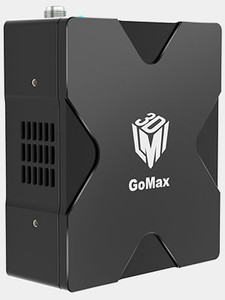
The Gocator 2D Smart Camera includes onboard AI tools (anomaly detection, classification) as part of the base GoPxL software running on the camera - no separate license required. The GoPxL Anomaly Detector is a separately licensed AI tool that runs on the GoMax Smart Vision Accelerator paired with Gocator 3D sensors (laser line profilers, snapshot sensors, line confocal sensors). Both deliver AI-based defect detection, but the 2D Smart Camera's AI is integrated into the camera hardware while the GoPxL Anomaly Detector requires the GoMax accelerator and a licensed dongle for 3D sensor deployments.
Yes. AI training and inference both run directly on the Gocator 2D Smart Camera's NVIDIA Jetson Orin NX processor using GoPxL's integrated training workflow. There is no cloud upload, no subscription fee, and no separate training license required. Engineers can train models on real production data, retrain anytime the process changes, and deploy updated models locally - all without external services or recurring costs.
Yes. Multiple cameras can be deployed for parallel multi-station inspection. Each camera operates as an independent device on the network with its own GoPxL software, but inspection logic and AI workflows can be transferred between cameras through GoPxL - useful for scaling from a pilot deployment on one station to factory-wide rollout. The cameras integrate over standard Gigabit Ethernet and support the standard industrial protocols required for multi-sensor PLC coordination.
Automation Distribution's application engineers work directly with LMI Technologies to scope 2D Smart Camera deployments. Whether you are replacing a PC-based vision system, adding 2D inspection to a Gocator 3D installation, building a new AI-powered inspection cell, or evaluating edge AI vision for the first time, we will help you determine the right model, the right lens, and the right integration approach. Contact us for current order availability and lead times.
Request a quote or call 1-888-600-3080
LMI Technologies

LMI Technologies
LMI Technologies
LMI Technologies